

We develop websites designed to convert.
Built for companies ready to scale
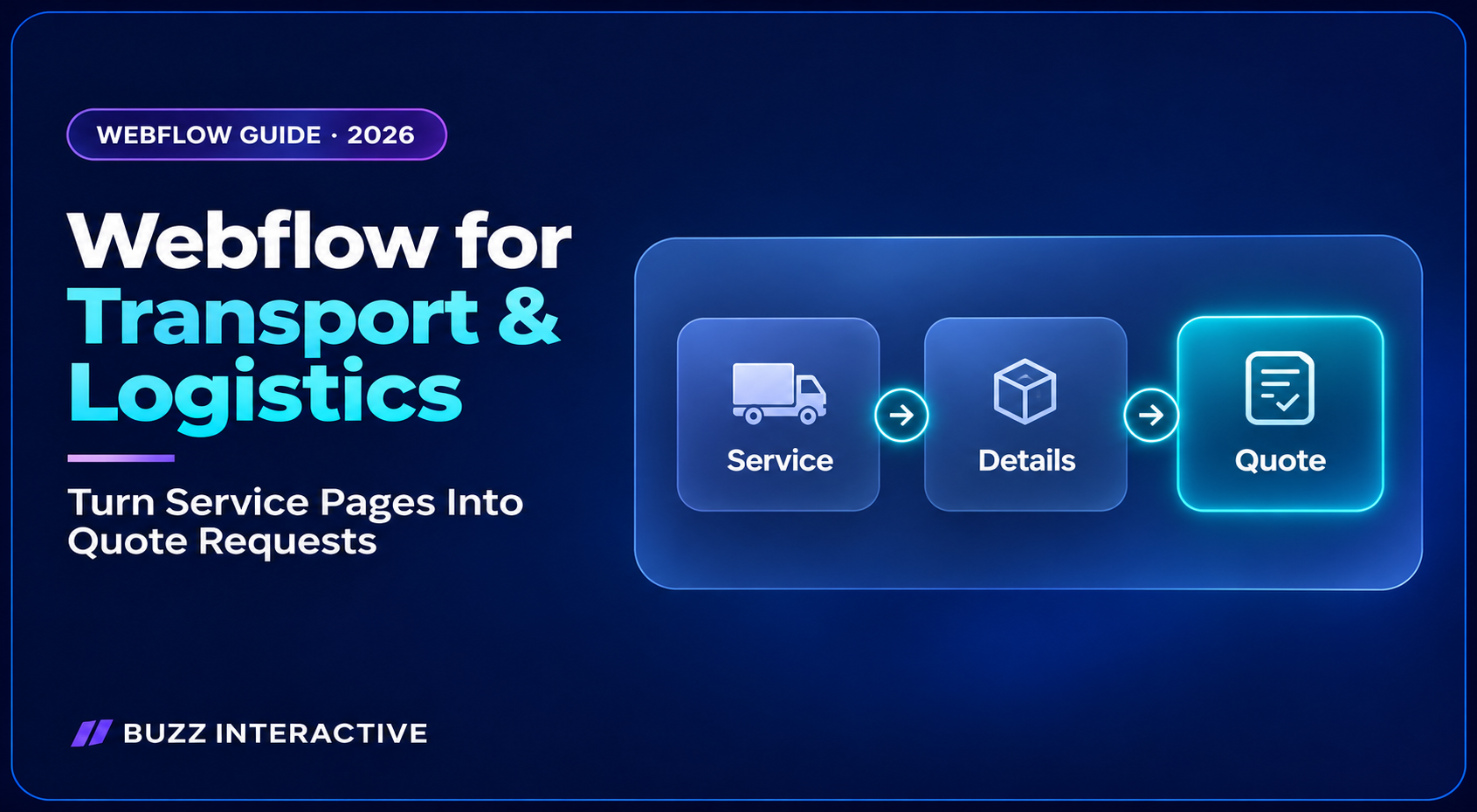
Webflow can turn transport and logistics service pages into quote requests when the site captures the commercial facts needed to assess a job. A generic name, email and message form creates follow-up work, not a qualified RFQ. The website should establish coverage, modes, cargo fit, proof and service levels before collecting route, volume, timing and handling requirements. Rate engines, shipment tracking and transport management remain in specialist systems.
A buyer often arrives with a lane, shipment profile and deadline already in mind. Many logistics sites answer with broad claims about reliability and global reach but hide coverage, modes, constraints and evidence. The buyer cannot establish fit, and the sales team receives vague requests that require another round of discovery.
The fix is not a longer contact form on every page. It is a connected journey in which each service page pre-qualifies the opportunity and the quote route collects only the information that changes feasibility or price.
| Buyer question | Service-page answer | RFQ implication |
|---|---|---|
| Can you handle this movement? | Modes, cargo types, service levels and exclusions | Capture the relevant service |
| Do you cover the lane? | Origins, destinations, hubs and partner network | Capture route and border points |
| Can you meet the timing? | Transit ranges, cut-offs and operating model | Capture ready date and deadline |
| Have you handled similar freight? | Case studies with lane, volume and outcome | Increase confidence before form completion |
| What affects the quote? | Weight, dimensions, handling, customs and access | Ask only price-driving fields |
The path from service page to qualified RFQ
Give the buyer enough evidence to confirm fit before asking for operational details
Discover
Validate
Request
Route
A quote request is valuable when the commercial and operational context arrives with it.
Separate air, ocean, road, rail, warehousing, customs, last-mile and moving services when the buyer criteria differ. Each page should state cargo fit, geography, service levels, typical constraints, process, evidence and the appropriate next step. Shipping TNC and Frevanta both use separate service and case-study collections, which is the right structural direction.
| Service-page section | Information to include | Reason |
|---|---|---|
| Fit | Modes, cargo, sectors, shipment types and exclusions | Lets buyers self-qualify |
| Coverage | Lanes, regions, hubs and network model | Confirms geographic relevance |
| Process | Booking, documentation, handoffs and communication | Reduces operational uncertainty |
| Evidence | Comparable lanes, volumes and service outcomes | Proves capability |
| Systems | Tracking, portal, EDI or API availability | Supports technical evaluation |
| Quote action | Service-aware RFQ with response expectation | Turns interest into usable demand |
Start with the minimum fields needed to route and assess the request. For freight, that often includes service or mode, origin, destination, ready date, cargo description, package count, dimensions, weight, special handling and contact details. For moving, property type, access, inventory scale, distance and target date may matter more.
Use conditional fields so a domestic move is not asked for customs data and a warehousing enquiry is not forced through a shipment form. Explain why sensitive or complex details are required, preserve user input after validation errors and state the expected response time.
Where the website ends and logistics systems begin
Keep the public buying journey clear without pretending Webflow is a TMS
Webflow
Integration
Operations
The website qualifies demand; operational systems price, schedule and execute the movement.
A logistics case study should name the type of shipper, cargo, route or geography, service level, constraints, solution and measurable operational outcome where disclosure permits. A logo wall cannot show whether the company has moved comparable freight. Link each case study to the services, sectors and lanes it supports.
Create durable pages for services and genuine coverage areas, not hundreds of thin city combinations. Answer concrete questions about modes, documentation, timing, cargo suitability, tracking and quote requirements. Use internal links from sector pages and case studies, and keep route claims current.
HomeShift TNC, Shipping TNC and Frevanta provide useful service, case-study and quote-page structures. Their listings also make an important boundary clear: a template does not calculate freight rates, track shipments, produce customs documents, schedule crews or manage claims. Those functions belong in removals, freight or transport-management software.
| Choose | When it fits |
|---|---|
| Webflow | Brand, service content, coverage, case studies and qualified demand are the priority |
| Industry website platform | A small operator wants bundled website, booking and operational tools with limited customisation |
| Headless CMS | Coverage and service data must feed several sites, portals or apps |
| Custom application | Live rates, authenticated tracking or workflow software is the primary customer experience |
Buzz Interactive designs and develops Webflow systems that help logistics firms explain coverage, prove experience and capture the information sales and operations need to respond.
Explore our Webflow design and development services or review our Webflow guide for marketing teams.


